Dance is an art form that generally refers to movement of the body, usually rhythmic and to music,[1] used as a form of expression, social interaction or presented in a spiritual or performance setting.
Dance may also be regarded as a form of nonverbal communication between humans, and is also performed by other animals (bee dance, patterns of behaviour such as a mating dance). Gymnastics, figure skating and synchronized swimming are sports that incorporate dance, while martial arts kata are often compared to dances. Motion in ordinarily inanimate objects may also be described as dances (the leaves danced in the wind).
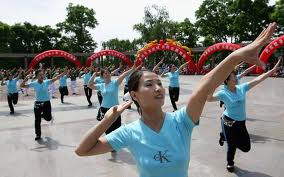
Definitions of what constitutes dance are dependent on social, cultural, aesthetic, artistic and moral constraints and range from functional movement (such as folk dance) to virtuoso techniques such as ballet. Dance can be participatory, social or performed for an audience. It can also be ceremonial, competitive or erotic. Dance movements may be without significance in themselves, such as in ballet or European folk dance, or have a gestural vocabulary/symbolic system as in many Asian dances. Dance can embody or express ideas, emotions or tell a story.
Dancing has evolved many styles. Breakdancing and Krumping are related to the hip hop culture. African dance is interpretive. Ballet, Ballroom, Waltz, and Tango are classical styles of dance while Square and the Electric Slide are forms of step dances.
Every dance, no matter what style, has something in common. It not only involves flexibility and body movement, but also physics. If the proper physics is not taken into consideration, injuries may occur.
Choreography is the art of creating dances. The person who creates (i.e., choreographs) a dance is known as the choreographer.
Origins and history of dance
Main article: History of dance

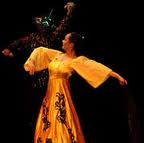
Dance does not leave behind clearly identifiable physical artifacts such as stone tools, hunting implements or cave paintings. It is not possible to say when dance became part of human culture. Dance has certainly been an important part of ceremony, rituals, celebrations and entertainment since before the birth of the earliest human civilizations. Archeology delivers traces of dance from prehistoric times such as the 9,000 year old Rock Shelters of Bhimbetka paintings in India and Egyptian tomb paintings depicting dancing figures from circa 3300 BC.
One of the earliest structured uses of dances may have been in the performance and in the telling of myths. It was also sometimes used to show feelings for one of the opposite gender. It is also linked to the origin of "love making." Before the production of written languages, dance was one of the methods of passing these stories down from generation to generation.[2]
Another early use of dance may have been as a precursor to ecstatic trance states in healing rituals. Dance is still used for this purpose by many cultures from the Brazilian rainforest to the Kalahari Desert.
Sri Lankan dances goes back to the mythological times of aboriginal yingyang twins and "yakkas" (devils). According to a Sinhalese legend, Kandyan dances originate, 250 years ago, from a magic ritual that broke the spell on a bewitched king. Many contemporary dance forms can be traced back to historical, traditional, ceremonial, and ethnic dance.
